kuniga.me > Docs > History of Zimbabwe Cheatsheet
History of Zimbabwe Cheatsheet
Index
- Early History
- Kingdom of Zimbabwe (1000-1700)
- Ndebele State
- British Colony (1890-1965)
- Rhodesia (1965-1979)
- Independence (1980-2017)
- Recent (2017-)
- Related Books
Early History
Like Botswana and Namibia, in early history the region was inhabited by the San people.
Around 2,000 years ago, the Bantu-Speaking people from the North arrived from Central Africa, and are likely the ancestors of the Shona people, who settled in the region for the next millennia.
Kingdom of Zimbabwe (1000-1700)
The kingdom was centered around the Great Zimbabwe, a complex settlement made of stones, whose ruins still stand today, and it was estimated to have hosted around 20,000 people. It was organized around the Shona people.
They traded with the Swahili coast exchanging goods such as gold, ivory and cattle for ceramics and textiles, through a network that connected them to Arabia and Asia.
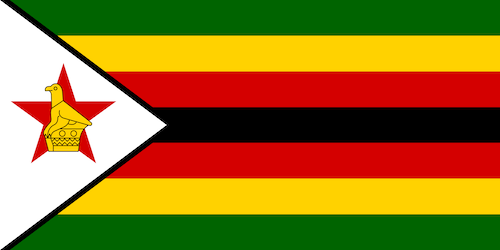
In the ruins of the Great Zimbabwe were found soapstone bird sculptures, now called the Zimbabwe Bird, which is in the country’s flag. The current name of the country since 1980, is after this ancient kingdom.
Around 1500 power started shifting to another Shona-based kingdom, Mutapa, around Northern Zimbabwe and central Mozambique.
Ndebele State
Around 1820, Mzilikazi who served under the Zulu leader Shaka Zulu, rebelled and fled North with followers, passing by Botswana, and eventually settling in a region called Matabeleland (Southwest Zimbabwe), founding the Ndebele kingdom. So despite having Zulu origins, the people of Zimbabwe are now known as the Ndebele and speak a language of the family Nguni, from which Zulu also derive.
The Ndebele conquered the Shona people, especially in Matabeleland, but outside of this region, the Shona are still the predominant ethnicity (70-80% of Zimbabwe’s population).
British Colony (1890-1965)
Cecil Rhodes was a British diamond magnate in the Cape Colony. He wanted to expand British control to the North. He ran a private enterprise (the British South Africa Company or BSAC) and got the imperial support for his plans. In 1888 he tricked the ruler of the Ndebele, Lobengula, to obtain concession for their land. The book The Scramble For Africa describes this process in more detail.
In 1890 BSAC sent an expedition known as the Pioneer Column which occupied the territory and founded a settlement called Salisbury (today’s Harare). In 1893, the Ndebele waged war against the British marking the First Matabele War. They were defeated and the BSAC occupied Matabeleland. Around 1896 the Ndebele and Shona resisted the occupation, known as the first Chimurenga (a Shona word for “struggle”) but were also defeated.
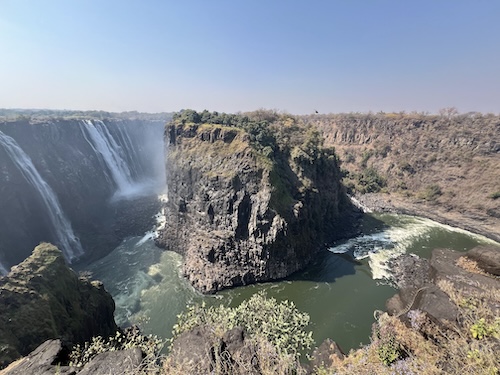
The territory occupied by BSAC was called Rhodesia. In 1899, the company split it into two regions, separated by the Zambezi river, and called Southern and Northern Rhodesia. Southern Rhodesia would later become Zimbabwe and Northern Rhodesia become Zambia.
More and more white settlers arrived and became large land owners, dispossessing the locals. In 1923 Southern Rhodesia became a self-governing British Colony, controlled mostly by the local white settlers.
Rhodesia (1965-1979)
After World War II, Britain started decolonization and to aid independence of its colonies, it wanted to establish majority rule. The minority white settlers who held power were against it. As nearby colonies such as Zambia and Malawi moved to African-led governments, the white leader Ian Smith decided to declare unilateral independence in 1965 and renamed Southern Rhodesia to simply Rhodesia (since Northern Rhodesia was now Zambia).
African nationalist leaders were arrested and armed resistance began. Two main movements took place: ZANU (Shona-based) and ZAPU (Ndebele-based). In the book An Arid Eden [1], the author Garth Owen-Smith witnessed this period of turmoil. He worked on a farm for white settlers and at some point was ambushed by a guerrilla unit.
In 1979 the war ended with negotiations and plans for election and transition. This period, from 1965 to 1979, also marks the Second Chimurenga.
Independence (1980-2017)
After the end of the war, Britain took temporary control of Southern Rhodesia to help with the election process. The Shona party ZANU won the election, led by Robert Mugabe. They renamed the country to Zimbabwe, named after the early kingdom of the Great Zimbabwe. Ian Smith continued in politics, leading the minority white parties, but his powers were greatly diminished.
Between 1983-87, the government, on the premise of suppressing dissidents, carried out massacres in Matabeleland, targeting many of the Ndebele community. This was known as Gukurahundi. This is a Shona word conveying “cleansing”, in reference to the Ndebele people.
Around 2000, Zimbabwe’s economy experienced hyperinflation after disastrous policies such as printing money to cover deficits, land reforms seizing control from white-owners leading to sudden agricultural productivity collapse.
Mugabe consolidated power and remained the leader of the country until his forced resignation in 2017 from a military intervention. His vice-president Emmerson Mnangagwa became president.
Recent (2017-)
There were some improvements but the ZANU-PF party still rules and many of the old systems are still in place.