kuniga.me > Docs > History of Portugal
History of Portugal
Index
- Key Facts
- Early History
- Germanic Kingdoms (409-711)
- Muslim Rule (711 - 1249)
- The Formation of Portugal (1128-)
- Interregnum (1383-1385)
- The Age of Exploration (1415-1550)
- Union with Spain (1580-1640)
- Empire
- First Republic (1910-1926)
- Military Coup (1926)
- Dictatorship: Estado Novo (1933-1974)
- Modern Portugal (1974-)
Key Facts
- The Romans colonized Portugal, and left as legacy the language, writing system and Christianity.
- The Germanic kingdoms that followed didn’t leave major lasting changes.
- The Arab/Berber kingdoms founded Andalusia.
Early History
One of the earliest known people to inhabit Portugal were the Celts (from 1,000-500 BCE) and the Lusitanians. There’s debate whether the Lusitanians were also Celtic.
The Castro culture (800 BCE), named after their fortified hill settlement, were a heavily Celticized culture. They occupied northwestern Portugal which includes modern cities such as Braga, Porto and the province of Galicia. The Lusitanians occupied what today is central Portugal, which includes cities like Viseu.
Carthage (237 - 206 BCE)
After the First Punic War, Carthage lost its colony of Sicily and suffered economic instability. It saw wealth potential in the Iberian peninsula, so in 237 Hamilcar Barca, a general, political leader and Hannibal’s father, crossed from Carthage to Iberia, where he exploited silver mines.
During this occupation, they founded Carthago Nova or Cartagena (in today’s province of Murcia). Hannibal actually grew up in Iberia. In 218 BCE, he decided to attack Sagunto, an ally of Rome which led to the Second Punic War. In 209 BCE the Roman general Scipio Africanus captured Cartagena and in 206 BCE he won the decisive battle of Ilipa (near Seville), cutting Carthage from its main backbone of resources.
The Roman Empire (206 BCE - 409)
The goal of the Romans was to cut the feeding vein of Carthage but once they realized the wealth of resources in the Iberian peninsula they decided to colonize it. There was fierce resistance by cities like Numantia and the Lusitanians, led by Viriathus.
The Romans founded or romanized many Portuguese cities such as Lisbon (then called Olisipo), Braga (Bracara Augusta), Coimbra (Aeminium) and Évora. Their legacy included the Portuguese language itself (Romance), Roman law and religion.
Germanic Kingdoms (409-711)
Kingdom of Suebi (409-585)
The Suebi were Germanic people that invaded Portugal as the Roman empire was weakening. They settled in Northern Portugal, with the capital in Braga and lasted for 170 years.
Kingdom of Visigoths (585-711)
In 585 the Visigoth King Leovigild conquered the Suebi and Portugal became part of a larger kingdom now centered in Toledo.
The Germanic tribes effected relatively little change in the Iberian peninsula culture, since they instead adapted to Roman norms, for example by adopting Christianity.
Muslim Rule (711 - 1249)
Following the conquest of North Africa by the Umayyad Caliphate, in 711 the general Tariq Ibn Ziyad crossed from Morocco (see Morocco around this period) and conquered most of today’s Portugal, called al-Andalus (Andalusia).
The conquerors were mostly Berbers in numbers but the Arabs were the powerful elite and bearers of cultural influence. The Europeans started referring to these people as the Moors.
Arab legacy includes many words in Portuguese such as: azeite (olive oil), açúcar (sugar), arroz (rice), alface (lettuce), almofada (pillow), jarra (jar), armazém (storehouse). Many words in Portuguese that start with “a” are from Arabic. The reason is that “al” is the article “the”, which ended up being part of the word.
The category of these words indicates that the Muslims brought a lot of new agricultural products and manufactured goods. They also brought science which spread much further. Words like algebra, algorithm, etc. entered Europe’s vocabulary via Andalusia.
Many places, especially in Southern Portugal, also reflect this heritage: Albufeira, Algarve. Algarve comes from al-Gharb (the West), which is related to Maghreb, the Northwest Africa region.
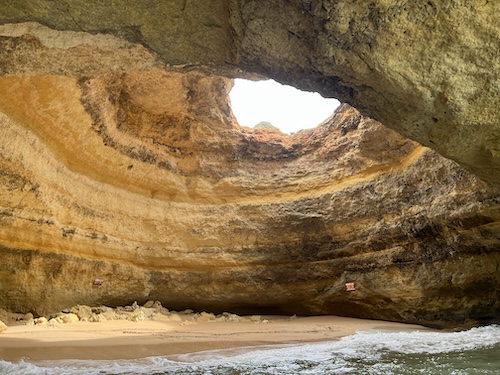
Besides the cultural legacy, there is not a lot of well-preserved Moorish architecture in Portugal as compared to Spain.
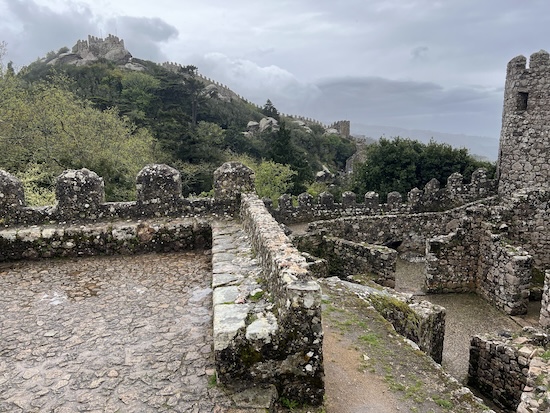
Reconquista (868-1249)
The Muslim conquest was never able to reach the mountainous regions of Asturias, where the Kingdom of Asturias was located.
Eventually they pushed South, into León becoming the Kingdom of León. In 868 Vímara Peres captured the city of Porto from the Moors and founded the county of Portugal under the Kingdom of León.
In 1064 King Ferdinand I of León captured Coimbra. In 1147 Afonso I of Portugal captured Lisbon after a siege. He received unexpected help from the Northern European crusaders, who were sailing to the Holy Land for the Second Crusade. In 1249 the Portuguese took Faro, the major city left in Moorish hands, effectively ending the Muslim rule in Portugal.
The Formation of Portugal (1128-)
Even before Portugal took control back from the Moorish, it had already become an independent kingdom, in 1128.
Henry of Burgundy was a count who came from France to fight the Moors. He married Teresa of León, the illegitimate daughter of the Leonese king Alfonso VI of León and Castile, who granted him control of the county of Portugal.
Henry died in 1112, leaving the infant Afonso I as heir. His wife Teresa was the regent but relied too much on the Galician nobility. The Portuguese supported Afonso I. This eventually led to a civil war in 1128.
After Afonso’s supporters won the Battle of São Mamede, Afonso I became the governor of Portugal. In 1139 after defeating the Muslims in Ourique, Afonso declared himself king of Portugal.
León did not recognize Portugal’s independence. So Afonso I obtained support from the Pope, and eventually in 1143 the Treaty of Zamora was signed, in which León saw the Portuguese regent as an equal. In 1179 the Pope provided official recognition.
Interregnum (1383-1385)
King Ferdinand I of Portugal died in 1383 without a male heir. His daughter Beatrice was married to John I, the king of Castile and León. If she inherited the throne, it was feared Portugal would be absorbed.
One faction supported Beatrice, but another supported John I, Ferdinand’s illegitimate half-brother. A war ensued and after winning the Battle of Aljubarrota, John I’s supporters came out winners and John I became the next king of Portugal.
The Age of Exploration (1415-1550)
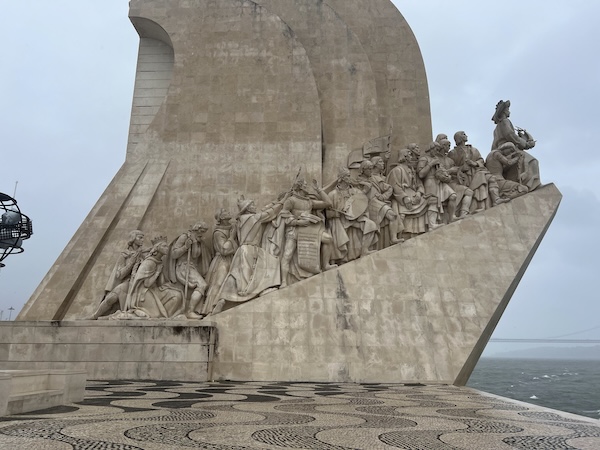
It’s somewhat surprising that a small kingdom like Portugal would spearhead the age of exploration, but several factors led to this: 1) Portugal was the westernmost kingdom of Europe, it was surrounded by Castile and León on the east, so had nowhere to expand. 2) It ended the struggle against the Moors in 1249, while Castile was still to expel them from the South and was relatively stable after the Battle of Aljubarrota.
Timeline:
- 1415 - captured Ceuta (Morocco), led by King João I
- 1434 - Passed Cape Bojador, the psychological barrier which blocked previous explorers
- 1483 - Diogo Cão reaches the Congo river
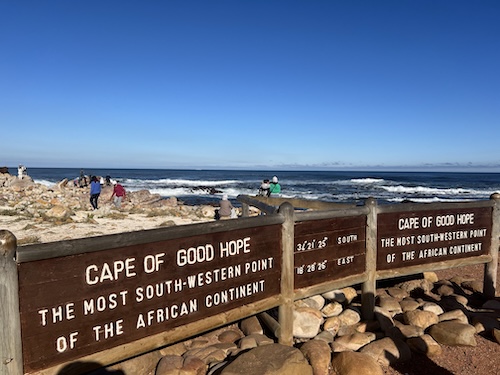
- 1488 - Bartolomeu Dias rounds the Cape of Good Hope
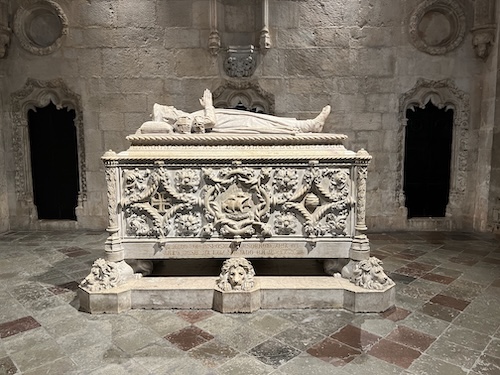
- 1498 - Vasco da Gama reaches India (Calicut)
- 1500 - Pedro Álvares Cabral reaches Brazil
- 1513 - Southern China, Macau
- 1543 - Japan
In 1437, after the success of capturing Ceuta, the Portuguese wanted Tangier too. They were outmaneuvered by the Moroccans. They surrendered and were let go with the promise to return Ceuta. They left Infante Fernando (Henry the Navigator’s brother) as hostage while they worked on the treaty but never honored it.
In 1557 King Sebastião I (Dom Sebastião) became king at 3 years old. In 1578, at 24, he attacked Morocco in Alcácer Quibir or Ksar el-Kebir (see Saadi Dynasty in Morocco) where he perished in the Battle of the Three Kings.
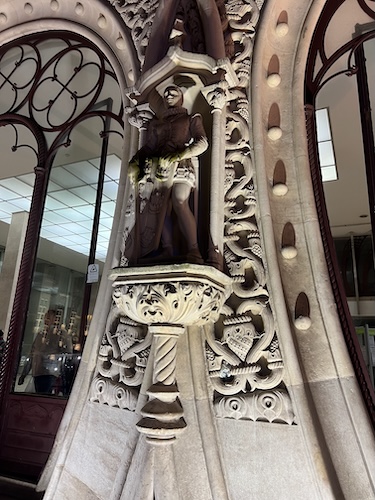
His great uncle, Cardinal Henry, became king, but he had no descendants, so when he died in 1580 the dynasty of the house of Aviz died out.
Union with Spain (1580-1640)
The king of Spain, Philip II, claimed the throne by stating he was a descendant of Manuel I through his mother Isabela of Portugal. He did not unify Portugal and Spain into one kingdom, he was technically king of two kingdoms.
The major consequence of this is that Portugal “inherited” Spain’s enemies, especially the Dutch, who decided to attack many of Portugal’s trading posts, expand its maritime empire at the expense of Portugal, symbolized by the VOC. Posts in places like Indonesia, Malacca in Malaysia, Sri Lanka changed hands.
In 1640, with Spain spread thin in the Thirty Years’ War and with increasing demands from the Portuguese, Portuguese conspirators proclaimed the Duke of Braganza as the king John IV. This started the restoration war.
Empire
Restoration War (1640-1668)
To defend against the Spanish, Portugal was seeking other European allies, in particular the English. In 1662 Catherine of Braganza married the English monarch Charles II. As a dowry the Portuguese king donated Tangier and Bombay (Mumbai) to the English. After losing major battles, Spain eventually recognized Portuguese sovereignty in 1668.
Treaty of Methuen (1703)
In 1703, Portugal and England signed the Treaty of Methuen in which Portugal got preferential access to Port wine in England and English textiles would get preferential access in Portugal. Some critics argue this was a bad deal for Portugal because it sold agricultural products to England, but had to buy manufactured goods from England. Some of the deficit was paid with gold found in Minas Gerais, in Brazil.
The Lisbon Earthquake (1755)
In 1755 an earthquake hit Lisbon and destroyed a great part of the city. Marquis of Pombal was one of the figures who led the new design and reconstruction of the city, which can be seen to this day.
Napoleonic Wars
In 1806 Napoleon failed to defeat Britain at sea, so he tried instead to exclude England from continental Europe. Portugal was an ally of England, and refused to comply. In 1807 France and Spain signed the Treaty of Fontainebleau which would allow French troops to march through Spain to invade Portugal.
Before reaching Lisbon, the royal court fled to Rio de Janeiro. By 1808 Rio became the effective capital of the Portuguese empire. The army stayed behind fighting the French invasion, eventually expelling them in 1811. Even after the end of the Napoleonic Wars in 1815, João VI stayed in Rio.
Liberal Revolution (1820)
Due to increasing control of the British in mainland Portugal, a liberal uprising began in Porto by revolutionaries demanding the king to return and the reduction of British influence. In 1821 João VI returns to Portugal and leaves his son Pedro I to rule Brazil.
Brazilian Independence (1822)
The Portuguese parliament downgraded Brazil to colony status again, which caused the Brazilian elites to revolt and Pedro I sided with them, eventually being proclaimed emperor and declaring Brazil’s independence from Portugal.
Civil War (1828–1834)
In 1826 João VI dies, and the obvious heir is Pedro I, who didn’t want to rule Portugal. Instead he wanted his daughter Maria II to marry his younger brother Miguel and rule together and came up with the Constitutional Charter of 1826, a relatively liberal constitution.
Miguel however had other plans and in 1828 he declared himself King Miguel I. He was an absolutist and was opposed by Liberals who stood behind Maria II, so a civil war ensued, also known as the Liberal Wars.
In 1831, Pedro I abdicated his throne in Brazil and left his son Pedro II as emperor. Miguel was eventually defeated in 1834 and Maria II became queen, and Pedro I died a few months later.
Constitutional Monarchy (1834-1910)
The years were turbulent until the 1850s and Portugal started modernizing, though still lagging behind other European powers.
Portugal still had colonies in Angola, Mozambique, Guinea, Cape Verde, São Tomé and Príncipe, Goa, Macau and Timor. During the scramble for Africa, Portugal wanted to connect its colonies of Angola and Mozambique.
This would interfere with England’s plans who wanted to connect its colonies in South Africa with North Africa, in particular Egypt. In 1890 they delivered an ultimatum and Portugal backed down.
Monarchy was weakening and republicanism was gaining traction. In 1908 two assassins with republican ties killed king Carlos I and his heir Luís Filipe. His surviving son Manuel II inherited the throne but wasn’t able to stop the republican momentum.
First Republic (1910-1926)
In 1910, the Republic was proclaimed in Lisbon and the monarchy overthrown. This period was highly unstable and included the participation of Portugal in World War I on the Allies’ side, especially because of its alliances with Britain and territorial disputes with the Germans in Africa.
Military Coup (1926)
In 1926 General Gomes da Costa carried out a military coup. An economics professor, António de Oliveira Salazar was invited by the military government to be finance minister in 1928 and gradually increased his power, becoming prime minister in 1932.
Dictatorship: Estado Novo (1933-1974)
A new constitution was created in 1933, establishing the Estado Novo. Censorship increased, political opposition was suppressed. Much of these were carried out by the state police known as PIDE. Salazar remained the de facto dictator until 1968.
Portugal remained neutral during WWII. From one side it had a long history of alliance with Britain. On the other, if it joined the allies it risked having Spain team up with Germany and invade. However, it was increasingly helping the allies for example by letting the British and Americans use the Azores as a military base.
Colonial Wars
After WWII most European countries started de-colonizing. Portugal refused and started calling its colonies overseas provinces. However, nationalist movements clashed with this view.
In 1961 India invaded Goa. Portugal refused to recognize it until 1974. In the 60s the African colonies of Angola, Guinea-Bissau and Mozambique started to rebel.
Salazar suffered a brain injury in 1968 and was replaced by Marcelo Caetano.
Carnation Revolution (1974)
Due to the heavy demands on the military because of wars in Africa, officers grew increasingly disgruntled and created the MFA (Armed Forces Movement). On April 25, 1974 they occupied Lisbon and deposed Caetano.
A woman started handing carnation flowers to the soldiers, so this coup was called the Carnation Revolution.
Modern Portugal (1974-)
After the revolution, the empire collapsed and the African colonies had their independence recognized: Guinea-Bissau, Mozambique, Cape Verde, São Tomé and Príncipe and Angola.
In 1975 the Timorese political movement FRETILIN declared independence. Soon after Indonesia under Suharto invaded and only left in 1999. East Timor was administered by the UN until 2002, when it gained independence.
In 1976 a new constitution was established and Portugal became a democracy. In 1986 it joined the European Economic Community (EEC) now EU.
In 1999 it handed Macau back to China.