kuniga.me > Docs > History of Morocco Cheatsheet
History of Morocco Cheatsheet
Index
- Pre-history
- Early History
- Muslim Conquest (c. 700)
- European Influence (1830 - 1956)
- Independent Morocco (1956 - )
- References
Pre-history
The oldest known homo sapiens remains were found in Morocco, Taforalt (82k years old).
Early History
One of the first cultures to inhabit Morocco is called Iberomaurusian (25k to 11k BCE) . This term was coined because it was believed that people from the Maghreb and the Iberian peninsula were related, but this is not widely accepted anymore.
The culture that followed is known as the Neolithic Berbers (6k to 3k BCE), which was pastoralist as opposed to hunter gatherers. This culture went through the Bronze age (3k to 1k BCE), Iron age (1k to 500 BCE).
From 1k BCE this culture started entering the sphere of other cultures, for which there are written records.
Phoenician traders had visited by the 8th century BCE. In this ballpark era the Amazigh script (Tifinagh) was created and was likely inspired by their alphabet.
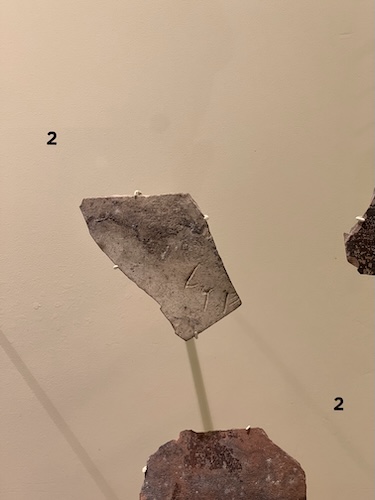
Around 5th century BCE Carthage had treaties with the Berber tribes.
Mauretania and Roman control (300 BCE to 430CE)
Mauretania was a Berber kingdom around the 3rd century BCE in a territory consisting of today’s Northern Morocco and parts of Algeria. It and its king were mentioned because they were involved in the second Punic wars.
They were called Mauri by the Romans (which is the origin of the term Moors in English) and in 33 BCE it became a client of the Roman empire, with Volubilis as the capital.
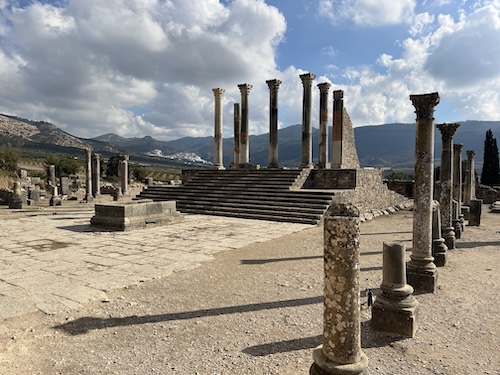
They installed the king Juba II of the Numidians (today’s Algeria) as the client ruler of Volubilis.
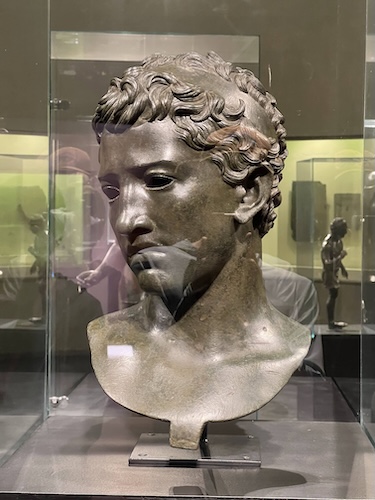
Juba II married the daughter of Cleopatra and thus his son and successor was thus called Ptolomy of Mauretania until 40 when he was assassinated by Caligula.
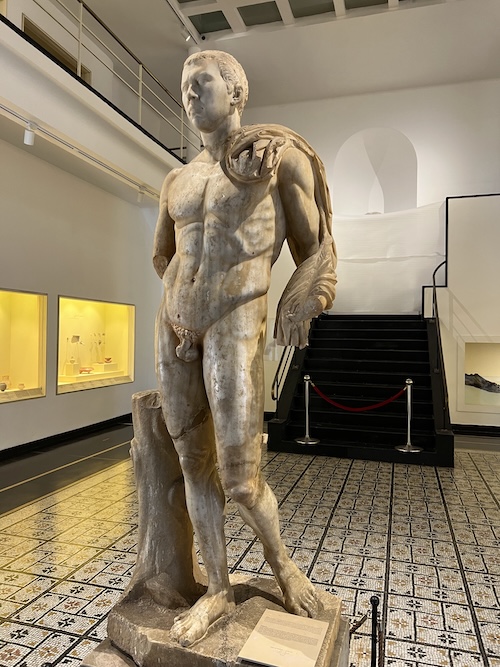
Mauretania Tingiana (42 - 8th century)
Then in 42 AD the kingdom was annexed to the Roman empire and divided into Mauretania Tingitana and Mauretania Ceaseriensis which correspond roughly to today’s Northern Morocco and Northern Algeria respectively.
Mauretania Tingitana had cities like Tingis (Tangier), Volubilis and Sala Colonia (Chellah in today’s Rabat).
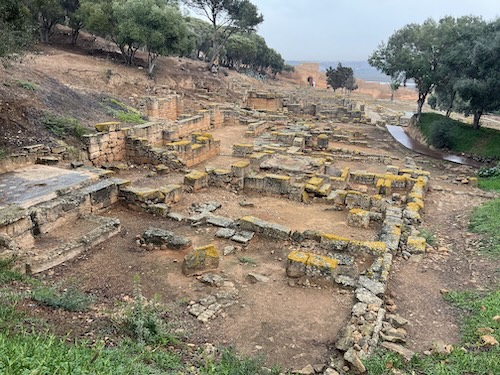
In 337 the Roman empire created four large prefectures, one of which was the prefecture of Gaul to which Mauretania Tingitana belonged (and included territories corresponding to Portugal, Spain and France).
Upon the fall of Rome, around 428, the Vandals invaded Mauretania Tingitana and expanded eastwards towards Mauretania Ceaseriensis. The Mauris retook control of the territory of Mauretania Tingitana.
When the Byzantine empire retook control in 533, it reorganized the prefecture systems and Mauretania Tingitana was now part of the prefecture of Africa.
Around 590, the Byzantines created exarchates, one in Italy and the other in Africa. As part of this, Mauretania Tingitana which was by now reduced to mostly Ceuta, was merged with what remained from Byzantine Spain (mostly the Southern coast) and the Balearic islands, and renamed Mauretania secunda. Eventually the Visigoths took control of the Spanish territory so only Ceuta remained.
Atlas Mountain Range. In Greek mythology the titan Atlas was said to live on the edge of the Western world and by some loose association this Westernmost mountain became known as Atlas.
Muslim Conquest (c. 700)
Since the 640s-670s the Umayyad Caliphate, centered in Damascus, started the conquest of North Africa. Around the year 700 they reached Morocco. Not many reliable sources exist for details, but it brought the Arabic language and culture, including Islam, to Morocco.
The local population eventually joined the ranks of the Umayyad armies. In 710 under the general Tariq Ibn Ziyad, which is believed to be Berber, invaded the Iberian peninsula and started Andalusia.
Around 743 the native Berbers revolted against the Umayyad Caliphate and managed to stay out of control of their successors, the Abbasids. They split into sub kingdoms: Barghawata, Sijilmasa, Nekor and Idrisid.
Idrisid Dynasty (789-974)
Idris is regarded as the founder of the Morocco state. The founder was Idris ibn Abdallah. He was from the Arabian peninsula and had fled the Abbasids. After arriving in Morocco he was made Iman of Awraba tribe.
His son Idris II became the sovereign of the Awrabas, moved the seat to Fes and encouraged Arab immigrants. The city of Moulay Idriss is named after them and their tombs are there.
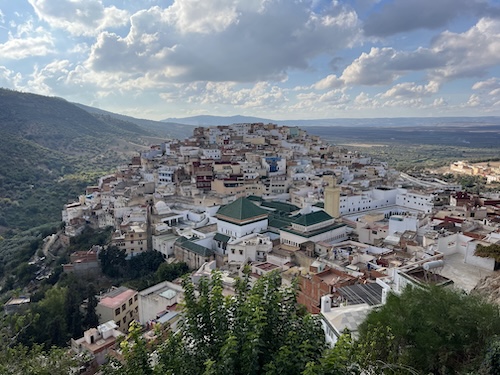
During this dynasty Fes flourished as a city in the trans-Saharan trade route, dominated by Berber traders. Mosque al-Qarawiyyin in Fes was built during this time.
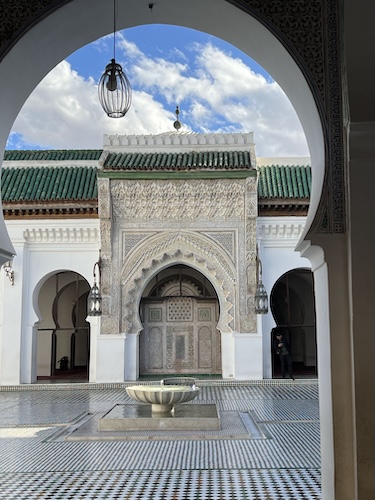
After 863 the power of the Idris dynasty started to weaken. The Fatimids (in Cairo) and the Umayyad (in Cordoba) struggled for control over the region.
Al-Hasan, the last of the lineage kept changing allegiances and was eventually defeated by the Umayyads in 985, ending the rule.
Another tribe, the Zenata, also kept changing alliances between the Umayyads and the Fatimids while also fighting the Idrisis. They built a ribat near the Sala Colonia (Chellah) which then became the current city of Rabat.
Almoravid Dynasty (1060-1147)
Ibn Yasin was a fundamentalist Muslim who built a community around the Sanhaja people (specifically the Lamtuna) in Southern Morocco. They eventually invaded Northern Morocco and founded the city of Marrakech.
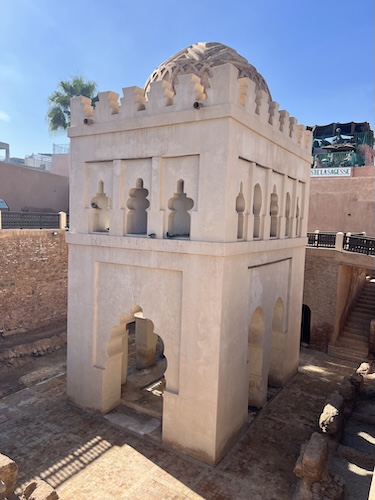
Ali ibn Yusuf was the 5th Almoravid ruler. He build the Almoravid Qubba and Ben Youssef Mosque in Marrakesh.
Around 1143, the Almoravids built a new ribat where the Kasbah des Oudaya is today, to defend against the Almohads. It wasn’t successful and the ribat was destroyed by the Almohads.
In Andalusia this period has the divided taifa kingdoms and some invited the Almoravids (Yusuf Ibn Tashfin) to help them fight the Christians.
Almohad Dynasty (1121-1269)
In 1120, Ibn Tumart established a Berber state in Tinmel in the Atlas mountains. His followers were called al-Muwahhidun (from which Almohad is named)
In 1130 they clashed with the Almoravids in Marrakesh but were defeated. He died shortly after and was succeeded by Abd al-Mu’min.
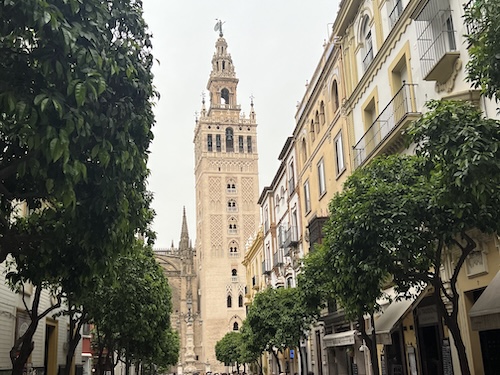
They conquered Andalusia and moved the capital from Cordoba to Seville. They built the Mosque (Giralda Tower) and the Golden Tower in Seville.
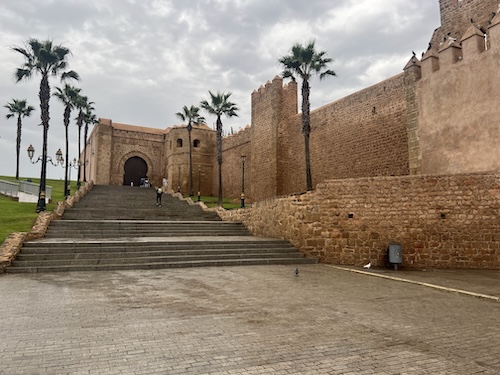
Al-Mu’min also destroyed the Almoravid’s ribat in Rabat and built a Kasbah in its place.
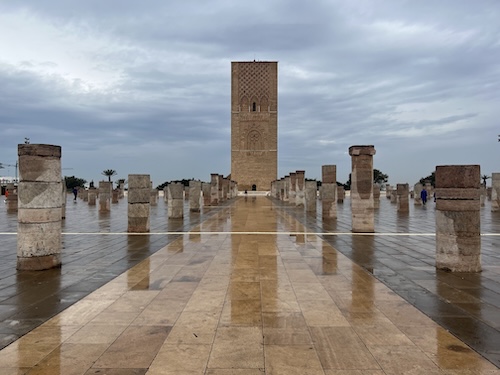
During his reign, the caliph al-Mansur attempted to build the largest mosque in the world, in present day Rabat, but he died in 1199 before the project was completed. After an earthquake, the remains are the Hasan Tower and partial columns.
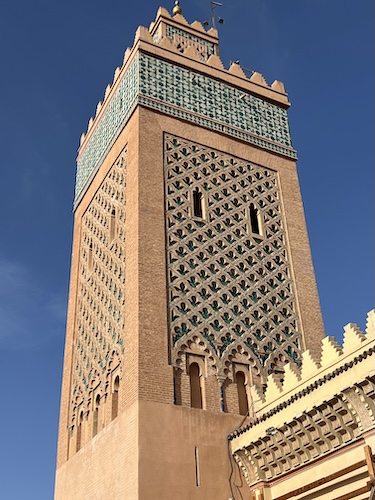
He also built the Katubiyya and Kasbah mosques in Marrakesh.
In 1224, the caliph Yusuf II (grandson of al-Mansur) died unexpected without heirs. The younger brother of al-Mansur, Abd al-Wahid, claimed the throne. However, Abdallah al-Adil, one of the sons of al-Mansur and then a governor of Murcia in Andalusia, challenged the decision and declared himself the caliph. He sent troops and resources to Morocco which enabled the Christians to take most of Andalusia back (reconquista).
In 1227 al-Adil was killed in Marrakesh and al Mu’tasim claimed the Caliphate. Al-Ma’mum, al-Aldil’s son in Seville, contested this. With Spain almost lost, he left with his forces in 1228 to Morocco, ending their rule in Spain.
They ruled with less and less power until they got ousted by the Marinids.
Marinid Dynasty (1244-1465)
In the 13th century, displaced by Arabs arriving in Algeria, the Berber tribe of Marin moved en masse to Morocco.
They lived under the Almohads. When they started being weakened in Spain the Marinids, through its leader Abu Yahya, started conquering territory in Morocco including Fez, in 1248.
In 1276, they extended the old city as Fez Jdid. Fez lived its golden age during this time.
In 1304 Ibn Battuta, the famous world traveller was born in Tangier, and died in 1369 in Marrakesh.
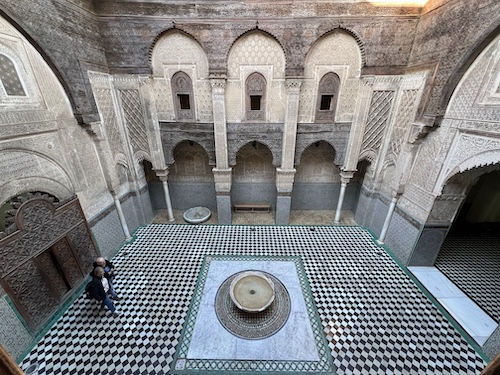
In 1325 the sultan Abu Said Uthman II built the Al-Attarine Madrasa in Fes.
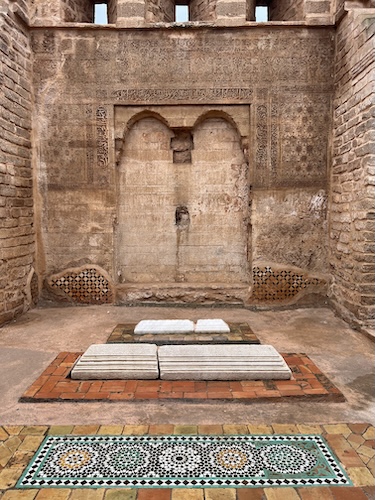
The Marinids also built the complex in Chellah in present day Rabat. Some sultans are buried there such as Abu Said Uthman II (d. 1331) and al-Hasan (d. 1351).
They also helped the Nasrids from Granada and held cities like Algeciras and Gibraltar. But lost most of its territory in Andalusia by 1344. During this time Portuguese and Spanish kept invading Morocco and the Marinids had to fight them.
Wattasid Dynasty (1472 - 1554)
The Wattasids were a tribe from the eastern Rif mountains and had influence over the Marinids royal family. As the Marinids power weakened the Wattasids took the opportunity to become the next successors.
The Wattasids didn’t last long and were unable to keep the Portuguese advance in check.
Saadi Dynasty (1549 - 1659)
The Saadian (or Sharifian) dynasty started in 1510 when Muhammad al-Qa’im was declared leader of the tries in the Sous Valley (Southern Morocco). After his death in 1517 he was succeeded by his son Ahmad al-Araj, who conquered Marrakesh in 1525.
In 1544, after conquering Fez from the Wattasids, his brother Mohammed al-Shaykh was declared sultan of Morroco the first of the Saadian dynasty. He was killed by the Ottomans in 1557, but his son and successor al-Ghalib had a relatively peaceful reign until his death in 1574. His son Abu Abdallah acceded to the throne.
Abd al-Malik, another of Mohammed al-Shaykh sons had fled during al-Ghalib’s reign and took exile in the Ottoman empire in Constantinople. He later formed an army in Ottoman Algeria and in 1576 won several battles against his nephew and took over the throne. In 1578, Abu Abdallah then aligned himself with the Portuguese king, Sebastião I and fought his uncle and the Ottomans in the battle of Ksar el Kebir (Alcácer Quibir). All three monarchs died during in the battle, which is why it’s also known as the Battle of Three Kings.
Al-Malik side was victorious and for Portugal this was a disastrous loss. The king left no heir and the capture and ransom of many Portuguese nobles bankrupted Portugal who fell under control of the Spanish crown until 1640.
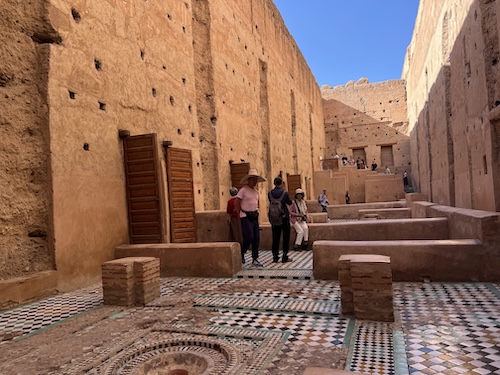
Al-Malik’s son, Ahmad al-Mansur, became sultan in 1578. He defeated the Songhai empire in 1591 and established the Pashalik, a government centered in Timbuktu. He built the El Badi palace, which got sacked by sultan Moulay Ismail (Alawi dynasty).
Al-Mansur also built the Saadian Tombs and is buried there.
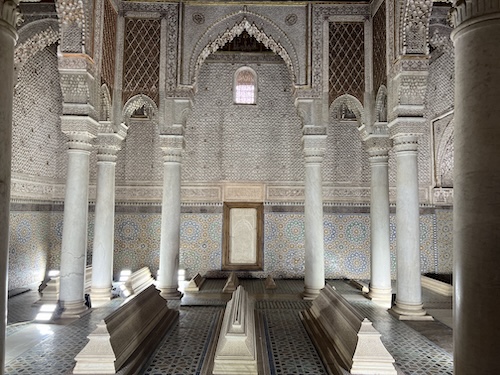
After al-Mansur’s death in 1603, infighting weakened the dynasty which ended in 1659.
Republic of Salé (1624 - 1668)
This state existed alongside the end of the Saadi dynasty and the Alawi one. It was created by moriscos who fled Spain because they were being forced to convert to Christianism.
They settled in the old medina of Rabat, across from the city of Salé (separated by the river Bou Regreg). As the grip of power from the Saadi weakened they formed their own Republic, the Republic of Salé aka Bou Regreg republic.
Alawi Dynasty (1666 -)
The dynasty started with Moulay Sharif in 1631 in a small oasis town called Tafilalt. One of his sons, Moulay Rashid expanded the dynasty power to the entire country. Upon his death, his half-brother Moulay Ismail continued the expansion of power. Moulay Ismail moved the capital to Meknes.
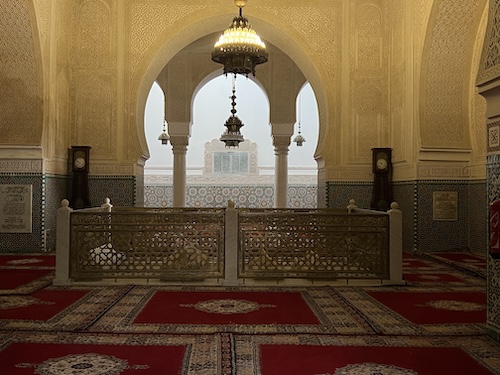
After that it went through periods of instability until the reign of Sidi Mohammed Ibn Abdallah or Muhammad III (1757).
The French started fighting Algeria in 1830 and in 1844 the leader Abd al-Kader fled to Morocco. The sultan Moulay Abd al-Rahman was protecting him and thus France waged war against Morocco. This culminated with the treaty of Tangier in which Morocco recognized Algeria as a French possession.
In 1859-1860 Morocco fought a war against Spain. Upon losing it Spain got sovereignty over the cities of Ceuta and Melilla. This happened during the reign of Muhammad IV.
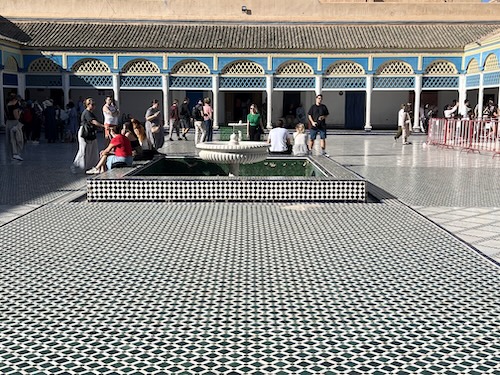
Muhammad IV had as grand vizier Si Musa, who built the Bahia palace in Marrakesh in the 1860s. The son of the vizier Ba Ahmed under the sultan al-Rahman expanded it.
Upon his death, Muhammad IV was succeeded by his son Hassan I in 1873. Hassan I died in 1894 and his son Abd al-Aziz became a sultan.
In 1907, unhappy with the influence of the French on the sultan Abd al-Aziz, his brother Abd al-Hafid performed a coup d’etat and took over the throne. This was known as the Hafidiya.
In 1912 the sultan Abd al-Hafid signed the treaty of Fez which made Morocco a protectorate by France but the Alawis were allowed to keep ruling.
European Influence (1830 - 1956)
This started as early as 1844 during the Franco-Moroccan war and the sign of the Tangier treaty.
In 1859 Morocco fought a war against Spain, which led to the treaty of Was Ras and a large debt to pay for war reparations, which they loaned from the British.
During the Scramble for Africa, France was interested in overseas colonies and the Foreign Minister, Theophile Delcasse, was the main figure behind it.
In 1905 Germany tried to curb increasing French control in Morocco. The Kaiser Wilhelm II visited Tangier and declared support to the sultan Abd-al Aziz and called for a conference to hold France accountable to other European powers. This was called the First Moroccan Crisis and led to the Algeciras conference in 1906.
Germany was outmaneuvered and Britain and France became closer partners.
French Protectorate (1912 - 1956)
In 1907 due to growing anti-European sentiment a mob in Marrakesh killed a doctor called Émile Mauchamp and France used this event as an excuse to invade Morocco, the city of Ojuda on the border with Algeria.
Later that year, tribesmen attacked a French customs house in Casablanca in protest to the Algeciras conference. The French responded by bombarding the city.
These events led to the Hafidiya. This also renewed Germany to demand a slice of the pie: in 1911 it sent a gunboat to Agadir and threatened war. This was called the Agadir crisis or the second Moroccan crisis. This resulted in France making Morocco a protectorate in 1912 (Treaty of Fez) and Germany getting more territory for its colony of Cameron.
France also signed a treaty with Spain to give it territory of Northern Morocco and a strip in the south, on the border with Western Sahara.
During this period France fought wars against Berber tribes to the east such as the Zaian and Riffian wars.
In 1944 the political party Istiqlal wrote a manifesto demanding full independence. It was supported by the nominal sultan Muhammad V, who was later sent to exile in Madagascar in 1953.
Protests broke out and the nationalist Muhammad Zarqutini bombed Marché Central in Casablanca during Christmas. After 2 years of protests, the French restored the sultan and started preparations for independence, which occurred in 1956.
Independent Morocco (1956 - )
April 7, 1956 France relinquished control of Morocco. It fought Spain to get the Western Sahara back but only got the strip of land called Cape Juby (given to Spain by France around 1912). Spain would keep the Western Sahara until 1975.
In 1957 Mohammed V turned the country into a constitutional monarchy (the Kingdom of Morocco) and became the first king.
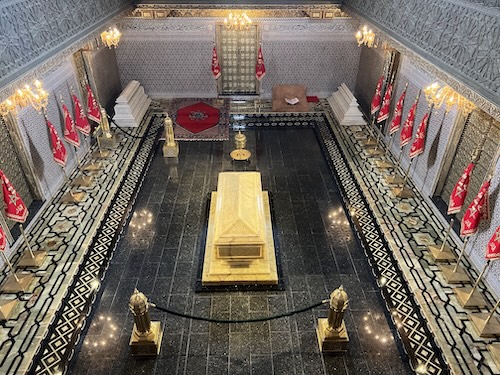
His son Hassan II assumed the throne in 1961 and it was a turbulent government. In 1962 after Algeria gained independence there were armed conflicts due to border disputes between the two countries (Sand war) but it ended without any territorial changes.
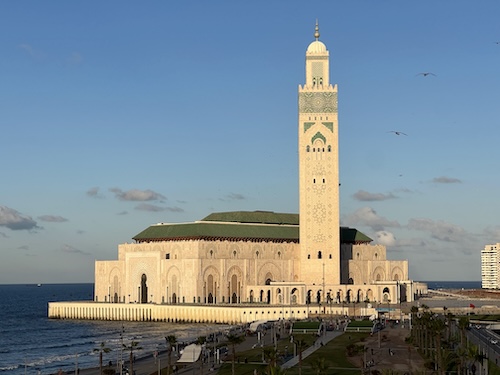
Hassan II’s policies were popular because it took many industries controlled by foreigners and gave them to Moroccans. Hassan II built a large mosque in Casablanca in 1993.
Western Sahara Conflict (1974-1991)
In 1974 Spain intended to divide Western Sahara between Morocco and Mauritania. However it was also talking to the Algerian backed Saharan independence movement known as the Polisario front.
In 1976, it gave the Northern ⅔ to Morocco and the Southern ⅓ to Mauritania. However many tribal chiefs were pledging alliance to the Polisario, which announced the Saharawi Arab Democratic Republic (SADR).
Morocco and Mauritania were both initially fighting against SADR but Mauritania eventually signed a peace treaty with them. A cease fire between Morocco and SADR was signed in 1988 and put into effect in 1991.
Mohammed VI (1999 - )
Hassan II died in 1999 and his son took over. Mohammed VI is more liberal. He revisited the Mudawana code which improved women’s rights and the Berber/Amazigh language was made an official language.
References
- [1] Wikipedia: History of Morocco