kuniga.me > Docs > History of Costa Rica Cheatsheet
History of Costa Rica Cheatsheet
Index
- Pre-European
- Spanish Arrival (1502)
- Colonial Period (1560-1821)
- Independence (1821)
- Mexico Empire (1822)
- Central American Federation (1823-1838)
- Civil War (1948)
- Democracy (1950-)
Pre-European
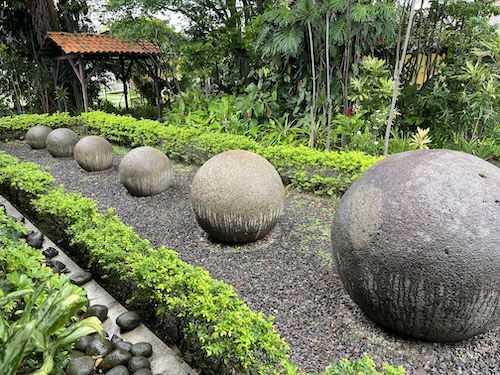
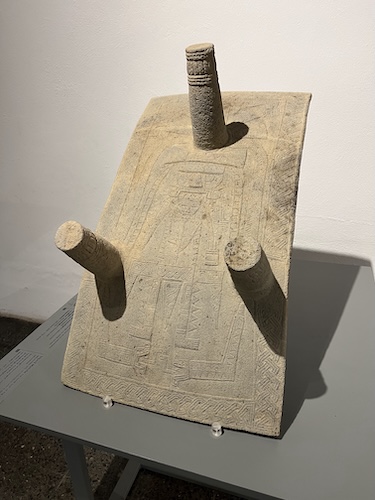
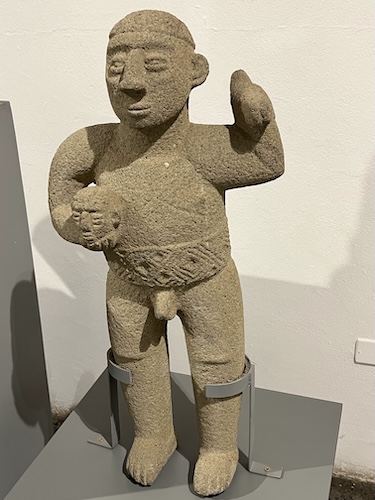
Costa Rica wasn’t inhabited by the Mayans and Aztecs in the North nor the Incas in the South, but it was composed of smaller chiefdoms, such as the Chorotega in the North (Guanacaste), Bribri and Cebecar in the Mountains and Diquís in the South.
Spanish Arrival (1502)
Columbus arrived in Costa Rica on his fourth voyage to the Americas in 1502.
The coast was named the Rich Coast due to reports of gold in the region, but it turned out to have far less gold than they hoped.
There was also a smaller indigenous population compared to the Aztecs and Mayans in Mexico and Guatemala, which meant a smaller labor force to be exploited.
Colonial Period (1560-1821)
When Spain colonized the Americas it established two viceroyalties, New Spain, covering most of Central America, Mexico and Southern USA, and has its capital in Mexico City. The other was Peru, covering most of South America (excluding Brazil) and centered in Lima.
The New Spain Viceroyalty was divided into Capitancies, one of which was Guatemala. The capitancies were further subdivided into provinces. The Guatemala capitancy included the provinces of Guatemala, Honduras, El Salvador, Nicaragua, Costa Rica and Chiapas (today a state of Mexico).
A bunch of conditions avoided the formation of large farms in Costa Rica. One was the lack of an existing large population to be laborers to exploit, and the relatively sparse mineral resources which did not attract a lot of colonists’ interest in exploiting.
The fertile lands of the Central Valley are high altitude and surrounded by mountains, with difficult access.
Independence (1821)
The Peninsular War was part of the Napoleonic Wars. He invaded Spain and put his brother Joseph Bonaparte as king, who wasn’t seen as legitimate by the population including the colonies.
During this power vacuum the colonies in America decided to form governing juntas initially to rule under the name of the captured king Ferdinand VII. However, in 1814 when the Napoleonic Wars ended and Ferdinand VII was restored to the throne, he wasn’t able to restore his control over the colonies.
Later these juntas evolved into independence movements, which included the Captaincy of Guatemala declaring independence from Spain in 1821.
Mexico Empire (1822)
Mexico fought a war of independence from Spain starting in 1810. In 1820 a revolution in Spain led to a weaker monarchy and church.
Conservative elites in the New Spain viceroyalty reacted against it and decided to establish a monarchy called the Mexico Empire and declared Agustín de Iturbide the first king.
When the captaincy of Guatemala declared independence they opted to join this Mexico empire.
In 1823 the Mexican empire collapsed.
Central American Federation (1823-1838)
The previous provinces of Guatemala, Honduras, El Salvador, Nicaragua and Costa Rica formed a federation, the Federal Republic of Central America, but it also did not last long.
Costa Rica became an independent Republic in 1838.
Guanacaste (1824)
The district of Nicoya was part of the province of Nicaragua. During the Central American federation period, in 1824, it decided to become part of the Costa Rica province, since it was more politically stable.
Today it still maintains a distinctive culture from the rest of Costa Rica.
Banana Republic (1800s)
Coffee grows well in the mild climate of the Central Valley of Costa Rica where San Jose is located.
However exporting coffee internationally was a challenge because it has to reach ports.
In 1871 the Costa Rican government awarded a contract to the railroad entrepreneur Henry Meiggs to build a railway to connect San Jose to the port city of Limón in the Caribbean.
In 1877 he died and his nephew Minor C. Keith took over the operations. The project was eventually finished in 1890, but it suffered from soaring costs and delays.
During that time Keith saw the demand for bananas increase in the US and decided to plant them alongside the railway for export and offset the construction costs.
Later the Costa Rican government was unable to pay for the construction and instead awarded Keith with land which he used to expand the banana plantations.
In 1899 Keith’s banana enterprises merged with the Boston Fruit Company, who controlled import and distribution of bananas in the US to create United Fruit Company, which then monopolized the entire supply chain.
This company would become very powerful and control a lot of land in Honduras and Guatemala, but to a lesser extent in Costa Rica where it had started, due to a stronger existing government . These countries became known as Banana Republics.
To help with the railroad construction and banana plantations Costa Rica encouraged immigrants from Jamaica, many of which decided to stay, which helped shape the culture of the Caribbean side of Costa Rica, for example in cities like Limón.
Civil War (1948)
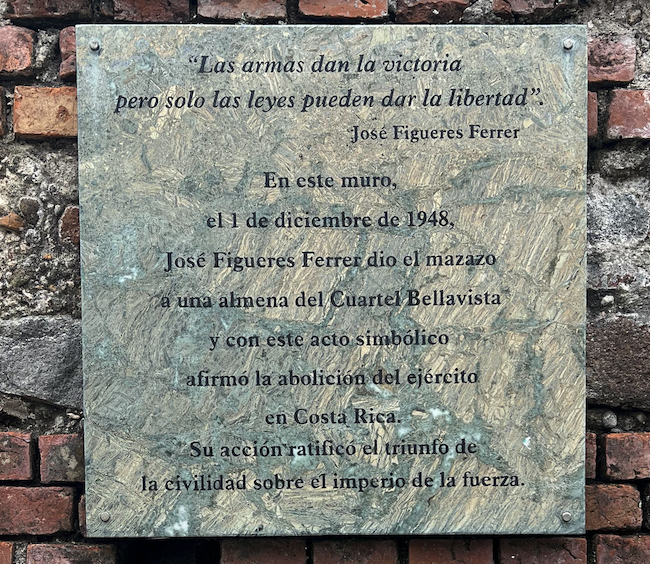
In 1948 there was a short civil war (lasted only 44 days) and the leader on the winning side, José Figueres Ferrer, decided to abolish the military.
Democracy (1950-)
Costa Rica is one of the most stable democracies in Latin America.
The economy diversified from agriculture into tourism and technology.
Quakers in Monteverde
In 1951 a group of 11 Quaker families from Alabama immigrated to Costa Rica, due to the compulsory draft to the Korean War. Quakers are pacifists and chose Costa Rica partially because it had abolished its military.
They decided to establish themselves in Monteverde. Initially as dairy farmers but later helped develop conservation efforts and ecotourism of the region.