kuniga.me > Docs > History of Brunei
History of Brunei
Index
- Before Islam (before the 14th century)
- Arrival of Islam (14th-15th century)
- The Golden Age (15-16th century)
- Conflict with Spain (1578)
- Decline of the Empire (17-19th centuries)
- The White Rajahs (1841-1946)
- British Protectorate (1888-1984)
- Independence (1984-)
Before Islam (before the 14th century)
Not much documented history, but it participated in the maritime trade with China, the Malay Peninsula, Indonesia and India.
Arrival of Islam (14th-15th century)
Islam arrived in Brunei through Muslim merchants.
The Golden Age (15-16th century)
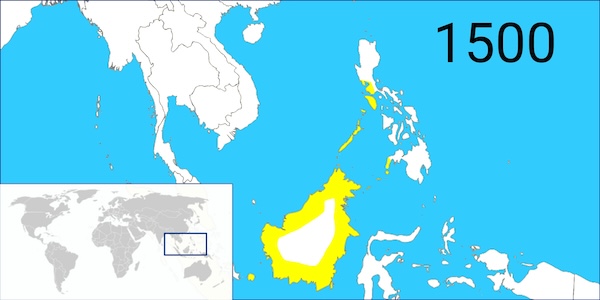
Brunei controlled or exerted influence over much of today’s coastal Borneo and parts of the Phillipines.
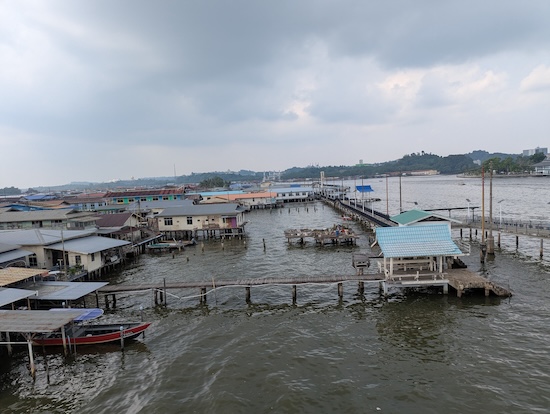
In 1521 Ferdinand Magellan reached Brunei, and the Portuguese described a settlement which is today Kampong Ayer.
Conflict with Spain (1578)
Spain colonized the Philippines and in 1571 set the capital in Manila. This clashed with the interests of the elite who had political ties to Brunei. In 1578 Spain invaded Brunei but withdrew due to logistical problems and resistance.
Decline of the Empire (17-19th centuries)
The power of the empire decreased due to internal conflicts and European dominance in maritime trading in the region.
The White Rajahs (1841-1946)
In 1839, an English adventurer named James Brooke arrived in Borneo and helped quell a rebellion against a Bruneian governor.
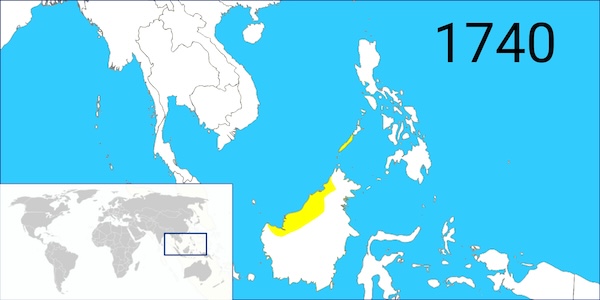
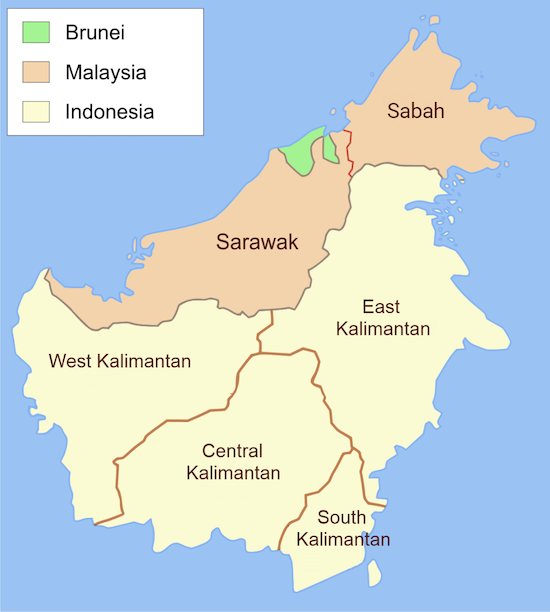
In 1841 he was made the Rajah of Sarawak. Brooke and his successors, known as the white Rajahs, expanded Sarawak at the expense of Brunei, which used to have a much larger territory.
In 1890, Charles Brooke, James’s nephew, annexed the Limbang district effectively splitting Brunei in 2 disconnected regions.
British Protectorate (1888-1984)
As Brunei continued to weaken and was threatened by the White Rajahs, they ironically asked the British for help, and became a protectorate in 1888.
In 1906 Britain established the resident system, in which it would appoint a British national to advise the sultan, but in practice the resident controlled the executive branch.
In 1929 oil was discovered in Brunei which changed the fortunes of the country. As of 2024, it still represents about 50% of the GDP of Brunei.
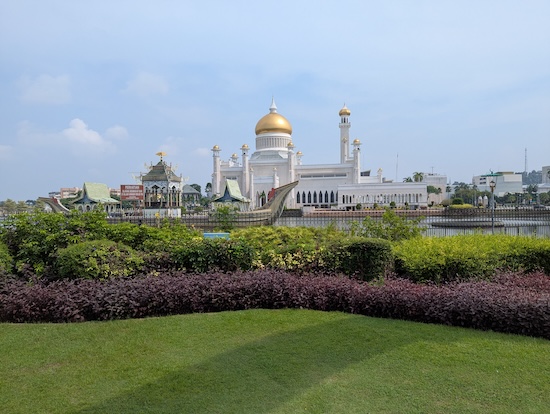
In 1958 the 28th sultan Omar Ali Saifuddien III, built a mosque and named it after himself.
In 1959 he adopted a new constitution which ended the resident system. Britain remained responsible for foreign affairs and defense but the sultan regained internal affairs power.
In 1962 the North Kalimantan National Army launched an uprising against the sultan. Part because they didn’t want Brunei to join Malaysia but instead form a Borneo coalition (with Saba and Sarawak). They also want greater democratic political representation.
The uprising was supressed with the help of the British and the sultan came out stronger. The effect of the rebellion had the opposite effect to what they were fighting for because the legislative council ceased to be through election and nowadays is by appointment.
The sultan Hassanal Bolkiah ascended to the throne in 1967 at 31, after his father abdicated.
Independence (1984-)
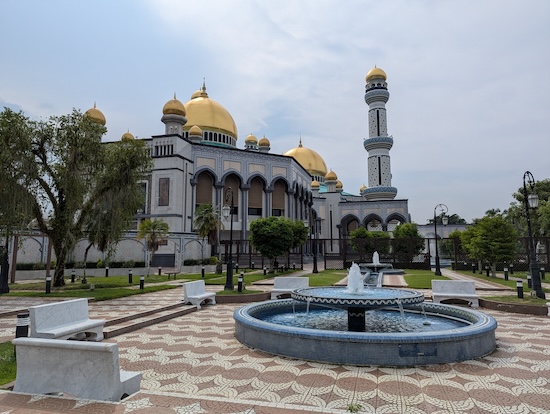
In 1984 Brunei became fully independent from Britain. In 1994 the sultan Bolkiah build the Jame’ Asr Hassanil Bolkiah Mosque to celebrate his silver Jubilee (25 year of reign).