Pachinko
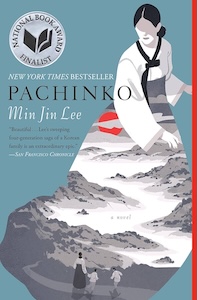
This is the book it took me the longest to read, north of 5 years with long pauses in between. The reason is that I had this book on Kindle and only read it when I don’t have another physical book around, which is rare.
Plot
Sunja met with Koh Hansu in Korea, a shady guy who was married and a member of the yakuza. He impregnates Sunja and abandons her. In the meantime, Sunja marries a Christian pastor, Isak, who decide to marry Sunja despite knowing she was expecting a child from another man.
They eventually flee to Japan to escape hardship. Sunja gives birth to Noa and later have another son with Isak, Mozasu. Isak's bother Yoseb and his wife Kyunghee move to Japan with Sunja. Hansu is ever present helping Sunja and Noa with expenses.
Isak dies. Noa, a good student, finds out he's the son of Hansu and runs away. He starts work for a pachinko, and starts a family pretending he's Japanese. Years later, Hansu tracks him down and, afraid of having his past and generalogy uncovered, kills himself.
Mozasu, never a good student, succeeds as the owner of a pachinko parlor. He marries Yumi, a Korean seamstress that works for his mother's friend. They have a son called Solomon. Yumi is later hit by a car and dies.
Solomon studies in the US and becomes an employee in a multinational company. He later becomes a scapegoat for an unsuccessful transaction and decides to join his father in the pachinko business (which is not well regarded, since it's associated with illegal activities).
Themes
Identity
The prevalent theme in the book is about identity, belonging and racism. Most characters in the book are ethnically Korean living in Japan. They’re not able to come Japanese citizens, even if they’re born in Japan like Mozasu.
Solomon, Mozasu’s son, studied in the US and was able to work at a prestigious multinational, but not as a local, but rather as a foreigner.
Pachinko are considered dirty business and are commonly associated as owned by Koreans. Etsuko, one of the Japanese characters say:
Koreans do lots of good for this country. They do the difficult jobs Japanese don’t want to do; (…)
Mediocrity
Solomon’s boss Kazu (a Japanese) goes on a tirade against mediocrity.
There’s nothing f*ing worse than knowing that you’re just like everybody else.
and that:
Japan is not f*ed because it lost the war or did bad things. Japan is \f*ed because there is no more war, and in peacetime everyone actually wants to be mediocre and is terrified of being different.